


The Ultimate Guide to Buying Ceiling Lights
Lighting is the unsung hero of interior design. You can spend thousands on the perfect sofa, curate a flawless gallery wall, and paint your room the trendiest shade of the year, but if your ceiling lighting is poor, the entire space falls flat. The right ceiling light does more than just banish the dark; it dictates the mood, highlights architectural features, and serves as a vital piece of the room’s overall aesthetic puzzle.
Whether you are building a new home from the ground up, embarking on a major renovation, or simply looking to refresh a tired living room, choosing the right lighting can feel overwhelming. With so many types, styles, and finishes on the market, where do you begin?
This ultimate guide will walk you through everything you need to know to make an informed, confident decision. We will break down the essential types of ceiling lights—from practical recessed lighting to breathtaking chandeliers—and explore how to match styles and finishes to your unique home decor.
Understanding the Types of Ceiling Lights
The first step in your lighting journey is understanding the functional differences between the main types of ceiling fixtures. Every room has different needs, and matching the fixture type to the room's proportions and purpose is crucial.
Pendant Lights
Pendant lights are individual fixtures suspended from the ceiling by a cord, chain, or metal rod. They act much like a necklace for your room, adding a decorative focal point while providing excellent downward task lighting or ambient glow, depending on the shade.
Pendants are incredibly versatile. You will most commonly see them used in multiples—often following the "rule of three"—suspended over a kitchen island or a long dining table. However, they are also becoming increasingly popular as space-saving bedside lamps, hanging low over nightstands, or as a single statement piece in a reading nook. When buying a pendant light, consider the drop length; you want it low enough to provide adequate light, but high enough not to obstruct sightlines across the room.
Flush & Semi-Flush Ceiling Lights
If you are dealing with standard or low ceilings (anything under 8 feet), flush and semi-flush ceiling lights are your best friends.
-
Flush Mounts: These fixtures sit completely flat against the ceiling. Because there is no gap between the fixture and the ceiling, they are the ultimate space-savers. Flush mounts are ideal for high-traffic areas where clearance is a priority, such as hallways, utility rooms, walk-in wardrobes, and bathrooms. Modern flush mounts have evolved far beyond the basic "glass dome" and now come in sleek, architectural designs.
-
Semi-Flush Mounts: These fixtures drop down slightly from the ceiling, usually suspended by a short stem, leaving a gap of a few inches. This small gap makes a massive difference in how the light behaves. A semi-flush light directs illumination downward into the room but also reflects light upward onto the ceiling. This upward reflection creates an illusion of a higher ceiling and makes the room feel larger and more open. They are the perfect middle ground for living rooms and bedrooms where you want a decorative fixture but lack the height for a chandelier.
Chandeliers
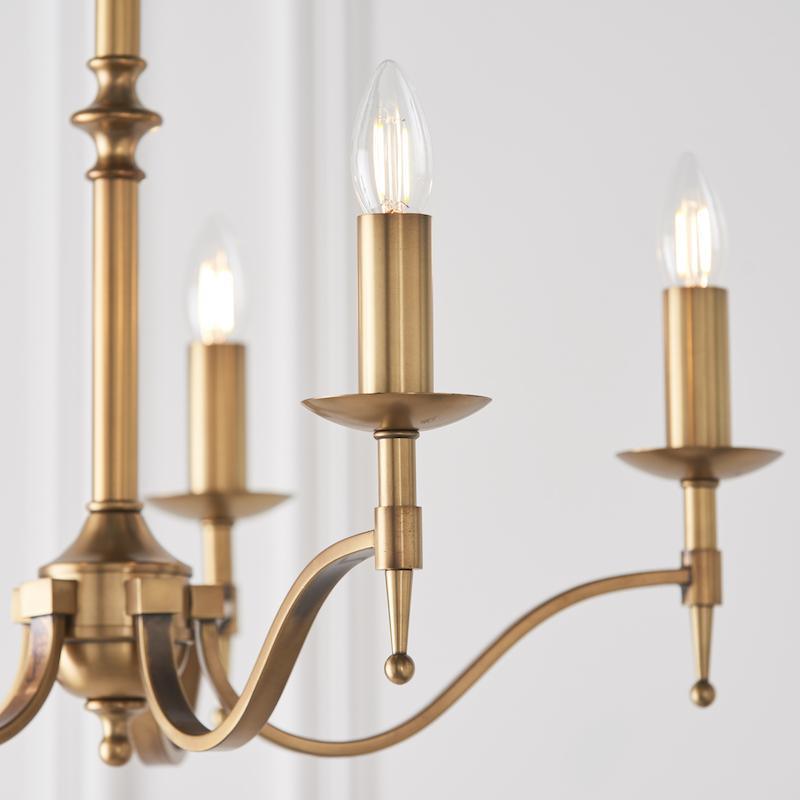
Once reserved exclusively for grand foyers and palatial dining rooms, chandeliers have been democratized. A chandelier is essentially a branched, multi-arm light fixture suspended from the ceiling. Today, they are used to bring a sense of luxury, drama, and focal interest to almost any room—including bedrooms, living rooms, and even luxurious master bathrooms.
When choosing a chandelier, scale is everything. A fixture that is too small will look lost in a large room, while an oversized one will overwhelm the space. A reliable interior design trick is to add the length and width of your room together in feet; that number is the ideal diameter of your chandelier in inches. For example, a 12-foot by 14-foot room demands a chandelier roughly 26 inches in diameter.
Tiffany Ceiling Lights
For those who view lighting as functional art, Tiffany ceiling lights offer unparalleled charm and history. Originating in the late 19th century and popularized by Louis Comfort Tiffany, these fixtures are crafted using the copper foil method to piece together hundreds of small, intricately cut pieces of stained glass.
Tiffany lights instantly add warmth, color, and a vintage or Art Deco sensibility to a room. When illuminated, the stained glass creates a rich, ambient glow that softens a space. They work beautifully suspended over traditional dining tables, as semi-flush fixtures in cozy living rooms, or as welcoming accent lighting in entryways. Because they are highly decorative, it is usually best to let a Tiffany light be the star of the room, keeping surrounding decor relatively understated to avoid visual clutter.
Lanterns
Lanterns bring a wonderful architectural and structural element indoors. Inspired by historical street lamps and nautical lighting, modern lanterns usually feature an open metal framework enclosing the light source, sometimes with glass panels, sometimes entirely open-air.
Lanterns bridge the gap between traditional and contemporary design. An open-frame geometric lantern in a matte black finish feels incredibly modern, while a brass lantern with seeded glass leans into a classic, rustic, or coastal aesthetic. They are phenomenal choices for double-height entryways, stairwells, and placed in pairs over large kitchen islands. Because they often lack solid shades, lanterns cast unobstructed, bright light and look exceptional when paired with vintage-style Edison bulbs.
Recessed Lighting
While chandeliers and pendants are the show-offs of the lighting world, recessed lighting (often called downlights) is the quiet workhorse. These fixtures are installed directly inside the ceiling cavity, leaving only a flat trim visible.
Recessed lighting is all about providing sleek, unobtrusive ambient light. It is essential in modern kitchens, basements, and large open-plan living areas. The key to successful recessed lighting is strategic placement. Avoid the "Swiss cheese" ceiling effect—where downlights are plastered in a rigid grid everywhere—and instead place them where light is actually needed: over countertops, angled toward artwork, or highlighting architectural features. Always put your recessed lights on dimmer switches so you can control the intensity of the light throughout the day.
Exploring Lighting Styles
Once you know what type of fixture you need, it is time to consider the style. Your ceiling light should converse naturally with the rest of your home’s decor.
Modern and Contemporary
Modern lighting is characterized by clean lines, geometric shapes, and a lack of fussy ornamentation. Look for sleek LED rings, minimalist glass globes, and asymmetrical designs. Contemporary fixtures often push the boundaries of shape and utilize integrated LED technology, which allows for ultra-thin, fluid designs that traditional bulb-based fixtures cannot achieve.
Industrial
Born from the aesthetic of converted factories and warehouses, industrial lighting embraces raw materials. Key features include exposed bulbs, wire cages, metal shades with visible hardware, and a generally utilitarian vibe. This style works exceptionally well in loft apartments, modern farmhouse kitchens, and spaces featuring exposed brick or concrete.
Traditional and Classic
Traditional lighting draws inspiration from 18th and 19th-century European decor. Think ornate detailing, crystal teardrops, sweeping metal arms, and fabric shades. A classic multi-tier chandelier or a beautifully crafted Tiffany ceiling light fits perfectly into this category. Traditional lighting brings a sense of formality, symmetry, and timeless elegance to a space.
Mid-Century Modern
Mid-century design (spanning roughly the 1930s to the 1960s) is currently enjoying a massive revival. Lighting from this era features organic curves mixed with geometric forms. The "Sputnik" chandelier—featuring multiple arms shooting out from a center sphere—is the most iconic example of this style. Mid-century fixtures often feature opaque glass globes and brass accents, bringing a retro yet sophisticated flair to living rooms and dining areas.
Coastal and Bohemian
For a more relaxed, earthy vibe, coastal and boho styles rely heavily on natural, woven materials. Ceiling lights made from rattan, bamboo, woven grass, and light woods add incredible texture to a room. They filter light beautifully, casting warm, patterned shadows across the ceiling and walls. These fixtures are perfect for sunrooms, relaxed dining areas, and airy bedrooms.
Navigating Finishes and Materials
The finish of your ceiling light ties the fixture to the room's hardware, such as door handles, cabinet knobs, and plumbing fixtures. While you do not need to match everything perfectly—mixed metals are highly encouraged by modern designers—there should be a cohesive thread.
| Finish | Aesthetic Vibe | Best Paired With |
| Brass & Warm Gold | Warm, luxurious, vintage, or mid-century. | Navy blues, emerald greens, crisp whites, and natural wood tones. |
| Matte Black | Bold, graphic, industrial, or modern. | Light, neutral walls (for high contrast) and minimalist architecture. |
| Polished Chrome | Clean, highly reflective, contemporary, and sharp. | Cool grays, stark whites, and modern glass furnishings. |
| Brushed Nickel | Subtle, traditional, transitional, and soft. | Warm grays, traditional cabinetry, and classic interior designs. |
| Bronze & Copper | Rustic, traditional, earthy, and warm. | Earth tones, rich leather, exposed brick, and farmhouse aesthetics. |
The Art of Mixing Metals
Gone are the days when every piece of metal in a room had to be identical. Mixing metals adds depth and a curated, "collected-over-time" feel to your home. The trick is to choose one dominant metal (perhaps your kitchen cabinet hardware) and one accent metal (your ceiling pendant lights). For example, matte black cabinetry hardware pairs beautifully with warm brass pendant lights over the island. The contrast ensures the lighting stands out as a focal point rather than blending into the background.
Technical Considerations: Getting the Details Right
Buying the right light isn't just about looks. To get the perfect illumination, you have to pay attention to the technical specifications.
The Importance of Layering Light
A single ceiling light hanging in the middle of a room is rarely enough to properly light a space. Good lighting design relies on three layers:
-
Ambient Lighting: The overall, general light of the room. This is usually achieved through flush mounts, chandeliers, or recessed lighting.
-
Task Lighting: Focused light for specific activities. Pendant lights over a kitchen island where you chop vegetables, or a focused downlight over a reading chair.
-
Accent Lighting: Light used to highlight specific features, like a picture light over a painting, or subtle LEDs inside a glass display cabinet.
When choosing a ceiling light, consider which of these layers it is meant to fulfill, and ensure you have other light sources (like floor lamps and table lamps) to balance the room.
Understanding Color Temperature (Kelvins)
The bulb you put into your fixture is just as important as the fixture itself. LED lighting is measured in Kelvins (K), which dictates the color temperature of the light.
-
2700K - 3000K (Warm White): Emits a cozy, yellowish glow. Ideal for living rooms, bedrooms, dining rooms, and anywhere you want to relax. This is the temperature that best mimics the classic incandescent bulb and traditional Tiffany or lantern styles.
-
3500K - 4000K (Cool White/Neutral): A crisper, whiter light. Best for task-oriented spaces like kitchens, bathrooms, and home offices where clarity is important.
-
5000K+ (Daylight): A very bright, slightly blue-tinted light. Generally too harsh for residential living spaces, but useful in garages, utility rooms, or highly detailed craft rooms.
Lumens vs. Watts
In the past, we bought bulbs based on watts (energy used). Today, with energy-efficient LEDs, we buy based on lumens (brightness output). For a standard living room, you generally want a total of 1,500 to 3,000 lumens overall, spread across your ceiling fixtures and lamps. When buying a ceiling light with integrated LEDs, check the lumen output to ensure it will be bright enough for your intended space. If the fixture requires separate bulbs, you have the flexibility to adjust the brightness by buying higher or lower lumen bulbs.
Dimmers are Mandatory
If there is one absolute rule in modern lighting design, it is this: put your ceiling lights on a dimmer switch. A chandelier that provides bright, necessary light for family game night needs to be able to dim down to a soft, romantic glow for a dinner party. Dimmers give your ceiling lights incredible versatility, extending the life of your bulbs and allowing you to instantly alter the atmosphere of your home with the slide of a switch.
Room-by-Room Ceiling Light Guide
To bring all this information together, here is a quick cheat sheet on how to approach ceiling lighting in the core rooms of your home:
-
The Kitchen: This is a task-heavy room. Start with a grid of recessed lighting for overall ambient light. Add pendant lights over the island for task lighting and visual interest. If you have an eat-in dining nook, a semi-flush mount or an open-frame lantern works perfectly.
-
The Living Room: Avoid harsh, overly bright ceiling lights. A stunning mid-century chandelier or a warm Tiffany ceiling light serves as a great focal piece. Supplement this central fixture with wall sconces and table lamps. Always use warm white bulbs (2700K) and dimmer switches here.
-
The Dining Room: The dining table is the stage, and the ceiling light is the spotlight. A dramatic chandelier or an oversized linear pendant is perfect here. Ensure the bottom of the fixture hangs about 30 to 36 inches above the tabletop so it doesn't block the view of your dinner guests.
-
The Bedroom: Comfort is key. A semi-flush fixture provides great general light without being overwhelming. For a touch of luxury, consider a small chandelier or a woven coastal pendant over the bed.
-
The Bathroom: Safety and clarity are paramount. Flush ceiling lights with proper IP ratings (water resistance) are essential. Pair these with specific task lighting around the vanity mirror to avoid casting downward shadows on your face.
Final Thoughts
Buying ceiling lights is an exciting opportunity to define the character of your home. By understanding the distinct roles of pendant lights, flush fixtures, chandeliers, lanterns, and recessed lighting, you can layer your illumination to create a space that is both highly functional and visually stunning.
Take your time exploring different styles—from the historic charm of Tiffany glass to the sleek appeal of modern matte black fixtures. Remember to measure your room, consider your ceiling height, and always, always install a dimmer switch. Armed with this guide, you are ready to look up and transform your home in a whole new light.