


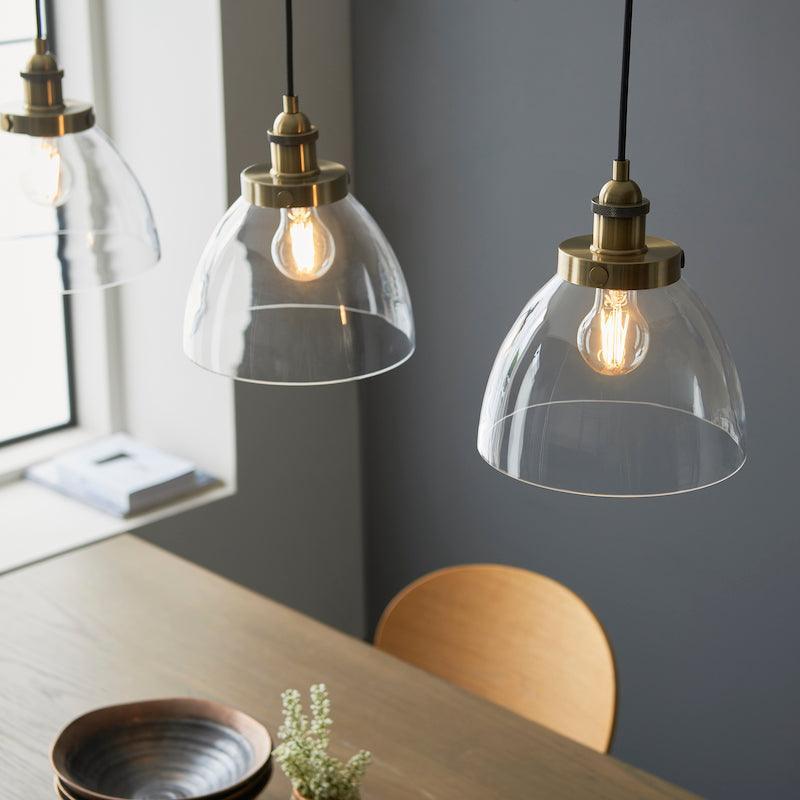
The Ultimate Buying Guide: How to Choose Your Perfect Dining Room Lighting
The dining room is the beating heart of the British home. Long gone are the days when it was a formal space reserved strictly for Sunday roasts or Christmas dinner. Today, our dining spaces are multi-functional hubs. They are where we help the children with their homework, set up our laptops for remote working, share mid-week meals, and host unforgettable dinner parties that stretch long into the night.
Because we ask so much of this space, choosing the right lighting can feel like a daunting task. You need bright, practical illumination for daytime tasks, but also the ability to instantly switch to a soft, romantic ambience for evening entertaining.
If you are feeling overwhelmed by the sheer amount of choice, do not worry. We have put together this comprehensive, friendly buying guide to walk you through the practical, technical, and design aspects of dining room lighting. By the end, you will have all the confidence you need to select the perfect fixtures for your home.
What Style of Dining Room Lighting Will Suit My Home?
The first step in your lighting journey is deciding on an aesthetic. Your main dining room light will act as a major focal point, so it should harmonise with your home's existing architecture and interior design.
Rather than viewing your light as a purely functional item, treat it as a piece of suspended art. Here is a quick breakdown of popular styles to help you narrow down your choices:
|
Lighting Style |
Best Suited For |
Key Characteristics |
|
Tiffany Glass |
Period properties, traditional homes, and eclectic spaces. |
Hand-cut stained glass, rich jewel tones, intricate bronze or brass metalwork. Creates a stunning, multi-coloured centrepiece. |
|
Contemporary & Minimalist |
Modern new builds, open-plan living, and sleek apartments. |
Sharp geometric lines, exposed bulbs, polished chrome, matte black, or brushed steel finishes. |
|
Classic & Heritage |
Victorian or Edwardian terraces, country cottages. |
Elegant chandeliers, fabric drum shades, candlestick motifs, and antique brass details. |
|
Industrial Chic |
Loft conversions, urban homes, and spaces with exposed brick. |
Raw materials, factory-inspired pendants, dome shades, and visible filament LED bulbs. |
Remember, there are no strict rules. Placing a highly contemporary, sculptural chandelier in a room with traditional Victorian coving can create a breathtaking, high-contrast interior design moment.
How Do I Layer Lighting in a Dining Room?
One of the most common mistakes people make is relying solely on one bright overhead light. This creates a flat, clinical atmosphere that is highly unflattering. To achieve that cosy, boutique-hotel feel, you must use "layering."
-
Ambient Lighting: This is your base layer, typically provided by your central ceiling pendant or chandelier. It illuminates the table and gives the room its general glow.
-
Accent/Atmosphere Lighting: This is where the magic happens. By adding wall lights around the perimeter of your dining room, you gently wash the walls in a soft light, eliminating harsh shadows in the corners and making the room feel wider and more inviting.
-
Task Lighting: If you have a sideboard or a serving buffet, a stylish table lamp placed here adds a lovely mid-level pool of light, perfect for carving a roast or mixing drinks without needing to turn the main lights up to full brightness.
How High Should I Hang My Dining Room Pendant or Chandelier?
This is perhaps the most frequently asked practical question we receive. Getting the height right is crucial for both aesthetics and comfort.
As a general rule in the UK, the bottom edge of your light fixture should sit between 75cm and 90cm (roughly 30 to 36 inches) above the surface of your dining table.
-
Why this height? This precise measurement is the sweet spot. It is low enough to create an intimate, warm pool of light directly over your food and table setting, but high enough that it will not obstruct sightlines when your guests are seated, nor will it glare directly into anyone's eyes.
-
Top Tip: If your dining room boasts incredibly high ceilings (over 9 feet), you can afford to add about 7cm (3 inches) of height for every extra foot of ceiling space.
What Size Light Fixture Do I Need for My Table?
Proportion is everything in interior design. A massive, heavy chandelier will visually crush a small two-seater bistro table, while a tiny single pendant will look completely lost above a grand, ten-seater oak dining table.
To find the perfect balance, follow these practical sizing guidelines:
-
The Width Rule: Your central lighting fixture should be approximately one-half to two-thirds the width of your dining table. Furthermore, the light should never be wider than the table itself; always leave at least 15cm (6 inches) of clearance from the edge of the fixture to the edge of the table to prevent tall guests from bumping their heads when standing up.
-
Matching Shapes: Think about the shape of your furniture. If you have a long, rectangular table, a linear multi-pendant light or an oval chandelier complements the shape beautifully. If you have a round table, a circular chandelier, a globe pendant, or a cluster of varied-height pendants works perfectly.
Do I Need a Dimmer Switch for My Dining Room?
From a technical standpoint, a dimmer switch is non-negotiable in a dining room. It is the single most effective tool for transforming the mood of your space.
During a dark winter morning when you are trying to read the newspaper, you need crisp, 100% brightness. But when you are uncorking a bottle of wine for a romantic dinner, that same level of brightness will ruin the atmosphere. A high-quality wall dimmer switch allows you to smoothly transition the light levels to suit the exact moment.
Always ensure that the light fixture you purchase is dimmable, and that you pair it with high-quality dimmable LED bulbs.
Which LED Colour Temperature is Best for Dining?
With the modern shift to energy-efficient LED lighting, shoppers now have to choose a "colour temperature," which is measured in Kelvins (K).
For a dining room, you should entirely avoid "Cool White" or "Daylight" bulbs (4000K and above), as these emit a bluish, clinical light that resembles an office or a hospital. This type of light makes food look highly unappetising and washes out skin tones.
Instead, always opt for Warm White (2700K to 3000K). This temperature closely mimics the beautiful, inviting glow of traditional incandescent bulbs and natural candlelight. It creates a relaxing environment, flatters your guests, and makes your culinary creations look absolutely delicious.
Shop Online with Total Confidence
Choosing your new lighting should be an exciting experience, not a stressful one. We know that buying delicate fixtures online requires trust, which is why we go above and beyond to ensure your peace of mind.
Every single light fitting we dispatch is meticulously checked and expertly wrapped using specialist protective packaging. We treat your new lighting with the utmost respect so that it arrives at your door in absolutely pristine condition, ready to transform your dining room.
For complete transparency regarding our fast UK courier networks, dispatch timelines, and our straightforward, hassle-free returns policy, please visit our comprehensive delivery information page. Order today, and let us help you set the perfect scene for your next dinner party.