


The right lighting does more than just illuminate a room; it defines the architecture, dictates the mood, and dictates how a space is experienced. Among the most powerful tools in an interior designer’s arsenal is the spotlight. Far removed from their origins in theatrical stage lighting, modern residential spotlights offer unparalleled control, versatility, and aesthetic appeal.
This comprehensive guide explores the innovative ways you can use spotlights to transform your home. From highlighting beloved artwork to engineering the perfect kitchen workspace, we will delve into the art and science of directional lighting.
Introduction
The Importance of Lighting in Home Decor
Lighting is the unsung hero of interior design. You can source the finest furniture, curate a beautiful palette of paint colors, and invest in stunning architectural details, but if the lighting is poor, the entire space falls flat. Lighting dictates our circadian rhythms, influences our mood, and fundamentally alters the perception of space.
In home decor, lighting is categorized into three essential layers:
-
Ambient Lighting: The general, overall illumination of a room.
-
Task Lighting: Focused light for specific activities, like reading or chopping vegetables.
-
Accent Lighting: Directional light used to highlight architectural features or decor.
Spotlights are unique because they can seamlessly perform all three of these functions depending on how they are positioned, angled, and controlled.
Overview of Spotlights
A spotlight is a light fixture that projects a narrow, intense beam of light directly onto a specific place or object. Unlike flush mounts or chandeliers that cast a wide, diffuse glow, spotlights are all about precision. They come in various forms, including recessed ceiling cans with adjustable gimbals, surface-mounted multi-arm bars, track lighting systems, and individual wall-mounted fixtures.
Historically, spotlights were bulky and purely utilitarian. Today, thanks to the miniaturization of electrical components and the advent of LED technology, they are sleek, stylish, and highly efficient.
Innovative Ways to Use Spotlights
Gone are the days when spotlights were simply lined up in a rigid grid across a living room ceiling. Today, designers use them to create dynamic, highly customized environments. By washing a textured brick wall with light, silhouetting a houseplant to cast dramatic shadows, or creating overlapping pools of light on a hardwood floor, spotlights bring a sense of movement and drama to stationary spaces.
Creating Ambiance with Ceiling Spotlights
When most people think of ambiance, they picture candles, table lamps, or a roaring fire. However, ceiling spotlights can be engineered to create an incredibly warm, inviting atmosphere when used correctly. The secret lies in control and layering.
Dimmer Switches for Adjustable Mood
The golden rule of modern lighting design is that every ceiling fixture should be on a dimmer switch. A spotlight running at 100% brightness at 9:00 PM will feel clinical and harsh, mimicking the bright midday sun when your body is trying to wind down.
Installing dimmer switches allows you to alter the room's atmosphere instantly. Lowering the intensity of your ceiling spotlights reduces glare and creates a softer, more intimate environment.
When choosing dimmers and bulbs, consider Color Temperature. Measured in Kelvin (K), color temperature dictates how "warm" or "cool" the light appears.
| Mood / Function | Recommended Kelvin | Ideal Room Application |
| Cozy & Intimate | 2700K (Warm White) | Living rooms, bedrooms, dining areas |
| Clean & Inviting | 3000K (Soft White) | Bathrooms, hallways, kitchens (general) |
| Energetic & Alert | 4000K (Cool White) | Home offices, task areas, garages |
Layering Light with Decorative Ceiling Spotlights
To create true ambiance, ceiling spotlights should never act alone. They must be layered with other fixtures.
Instead of pointing all your ceiling spotlights straight down (which creates the dreaded "interrogation room" effect), angle them toward the walls. This technique, known as wall-washing, bounces light off the vertical surfaces and back into the room. It eliminates harsh shadows on people's faces and makes small rooms feel significantly larger and more expansive.
Layer these wall-washing spotlights with a decorative floor lamp in the corner and a table lamp on a credenza. The spotlights provide the foundational glow, while the decorative lamps add the aesthetic charm.
Highlighting Art and Décor
One of the most traditional and effective uses of the spotlight is as accent lighting. If you have invested in beautiful artwork, sculptures, or architectural details, they deserve to be seen perfectly, day or night.
Using Spotlights for Wall Art
Lighting a painting or photograph requires precision. If the light is too bright, it washes out the colors; if the angle is wrong, it creates a blinding glare on the glass.
Kitchen Spotlights for Functionality
The kitchen is the ultimate multi-purpose room. It requires lighting that is simultaneously bright enough to safely wield a chef's knife and warm enough for guests to enjoy a glass of wine at the island. Spotlights are the perfect fixture to bridge this gap.
Brightening Workspaces
Task lighting is the priority in any kitchen. Relying solely on a central ceiling fixture forces you to work in your own shadow while standing at the counters.
Strategic Placement Guidelines:
-
Over the Counters: Place directional recessed spotlights about 12 to 18 inches away from the wall cabinets. Angle the beam directly down onto the center of the countertop. This ensures the light falls in front of you as you work, eliminating shadows.
-
Over the Island: While decorative pendants are beautiful over an island, they don't always provide enough directional light for cooking prep. A sleek, surface-mounted spotlight bar alongside or between pendants can deliver the intense, focused light required for rolling dough or reading a recipe.
-
Over the Sink: The sink area requires a dedicated directional spotlight. If your sink is near a window, place the spotlight directly above it to mimic the flow of natural daylight during the evening.
Integrating LED Spotlights for Efficiency
Kitchens require a significant amount of light output for many hours a day. Therefore, integrating LED spotlights is not just a design choice; it is a vital economic and environmental decision.
Modern LED spotlights consume up to 90% less electricity than traditional halogen bulbs and can last for decades. Furthermore, halogen spotlights generate a tremendous amount of heat. In a kitchen environment where the oven and stove are already raising the temperature, hot halogen bulbs can make the space uncomfortable. LEDs remain cool to the touch, keeping your kitchen comfortable and reducing the load on your air conditioning.
Spotlight Design Elements
Spotlights are no longer just utilitarian fixtures meant to be hidden. Today, the housing, finish, and style of the spotlight can act as a crucial design element within the room.
Incorporating Industrial Designs
The industrial aesthetic—characterized by raw materials, exposed mechanics, and bold, unapologetic functionality—pairs perfectly with spotlight design.
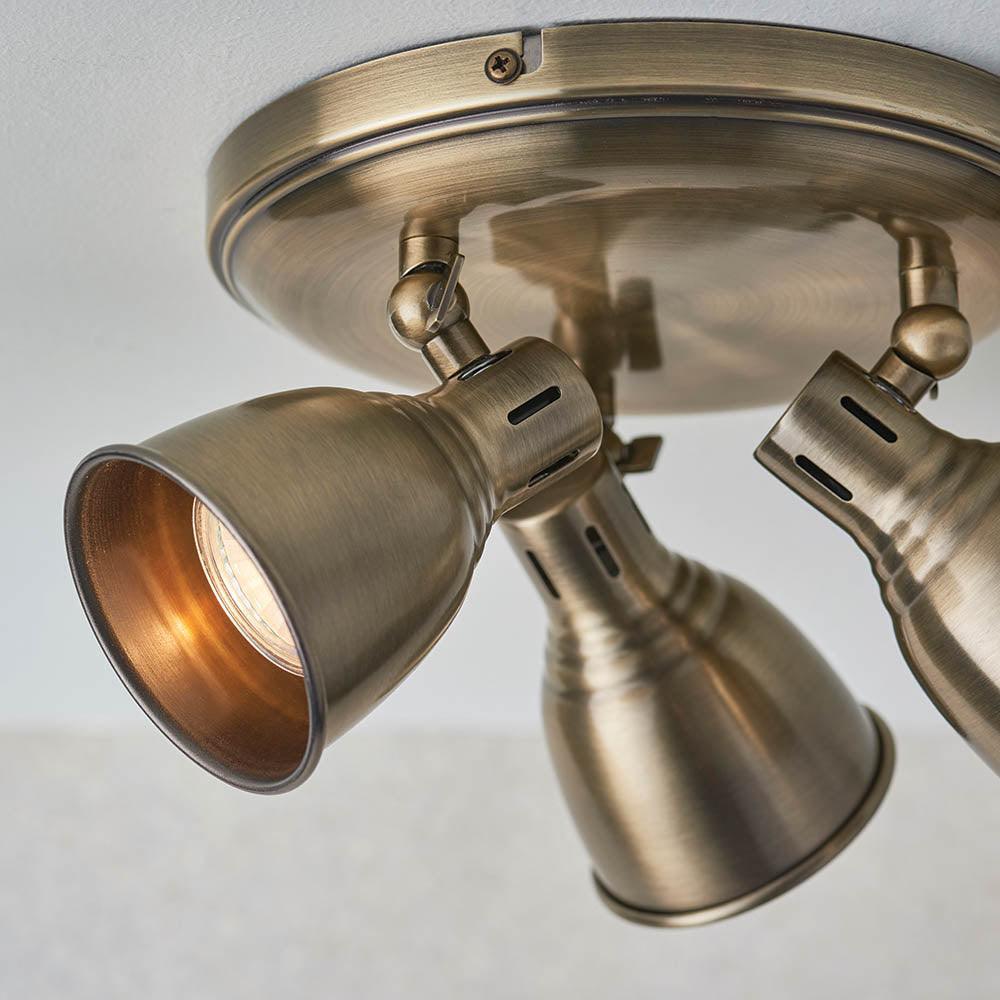
For a modern loft, a converted barn, or a contemporary kitchen, look for surface-mounted spotlights that celebrate their mechanics.
-
Finishes: Matte black, brushed steel, and antique brass are the pillars of industrial lighting.
-
Styles: Track lighting systems with exposed wiring, oversized adjustable heads reminiscent of old Hollywood stage lights, and fixtures with visible bolts and hinges add immense character.
These industrial spotlights act as functional sculptures on your ceiling. They contrast beautifully against softer elements in the room, such as plush velvet sofas or warm timber flooring, preventing the space from feeling too pristine or sterile.
Using Spotlights in Outdoor Spaces
The architectural impact of your home shouldn't disappear when the sun goes down. Outdoor spotlights serve two critical functions: security and aesthetic landscape design.
When bringing spotlights outdoors, technical specifications become paramount. Any exterior spotlight must have a high Ingress Protection (IP) rating. Look for fixtures rated IP65 or higher, which guarantees they are completely sealed against dust and protected against low-pressure jets of water from any direction (like heavy rain or a garden hose).
Landscape Lighting Techniques:
-
Uplighting: Place a ground-mounted spotlight at the base of a large, mature tree and point it upward into the canopy. This highlights the intricate branch structure and creates a stunning nighttime focal point.
-
Grazing: Position a spotlight incredibly close to a textured stone wall or a wooden fence, pointing the beam straight up or down. The acute angle casts micro-shadows across the texture, emphasizing the ruggedness of the material.
-
Silhouetting: Place a spotlight behind a distinctive plant or garden statue, pointing the light toward the wall behind it. This creates a striking, dark silhouette against a brightly lit background.
Versatile Ceiling Spot Lamps
The greatest advantage of ceiling spotlights is their inherent versatility. Unlike a chandelier, which provides a fixed light in a fixed location, a spotlight system can adapt as your life—and your furniture arrangement—changes.
Directional Lighting Techniques
The adjustable head (or gimbal) of a spotlight allows you to redirect your lighting scheme at a moment's notice. If you rearrange your living room, you don't need to call an electrician to move your ceiling lights. You simply climb a ladder, gently pivot the spotlight head, and aim the beam at the new location of your coffee table or reading chair.
This directional capability also allows for Zone Lighting in open-plan spaces. In a large room that serves as a kitchen, dining room, and lounge, you can use directional spotlights to carve out distinct zones. Keep the living room spotlights dimmed and angled toward the walls, while the kitchen spotlights remain bright and focused directly down onto the island. This creates psychological boundaries in a room without physical walls.
Mixing and Matching Styles
Lighting design does not have to be rigidly uniform. Mixing and matching the styles of your spotlights with other fixtures creates a curated, lived-in feel.
For example, a highly modern, minimalist track lighting system in matte black can look spectacular when installed next to an ornate, vintage crystal chandelier. The spotlights provide the functional, directional light required for modern living, allowing the chandelier to serve purely as an ambient, decorative centerpiece.
When mixing styles, try to maintain one unifying element to keep the design cohesive. This could be a shared color temperature (e.g., ensuring all bulbs are 3000K) or a shared metal finish (e.g., matching the brass hardware on your spotlights to the brass chain of your pendant light).
Recap of Creative Uses
Spotlights are the most agile and powerful tools in interior lighting design. As we have explored, they are far more than just basic ceiling fixtures. They are the means by which you can highlight a prized painting with a precise 30-degree beam, safely illuminate a bustling kitchen island, or transform a dark garden into an enchanting nighttime landscape.
By understanding the technical aspects—such as Kelvin color temperatures, Color Rendering Index (CRI) for art, and the critical importance of dimmer switches—you can elevate your home's lighting from purely functional to deeply atmospheric.
Experiment with Spotlights
Do not be afraid to play with light and shadow. The beauty of adjustable spotlights is that nothing is permanent. Angle a beam toward a new plant, point one directly at a textured wall, or experiment with cross-lighting a dark corner of your living room. The turn of a spotlight head can completely redefine the mood and architecture of your home. Embrace the versatility, layer your fixtures thoughtfully, and watch as your space transforms under the perfect, tailored glow.